This tutorial is designed for servers running in German data centers or the cloud, offering practical practical advice from remote management to performance monitoring. The content emphasizes network security, compliance, and operational efficiency, making it suitable for operations engineers and system administrators to quickly get started and optimize.
Managing servers in Germany requires compliance with data protection and cybersecurity regulations. It is recommended to first complete firewall rules, VPN or private connection configuration, and access control policies. Limit management ports, use role-based access control (RBAC) and least privilege principles, and regularly audit access logs to ensure compliance and traceability.
Common remote access methods include SSH (Linux), RDP (Windows), and cloud platform APIs. For the German environment, prioritize encrypted channels such as SSH or private network tunnels provided by cloud providers. When evaluating methods, consider latency, bandwidth, audit capabilities, and compliance requirements to select the appropriate access solution.
SSH is the most commonly used remote management tool. Practical recommendations include using strong key pairs (Ed25519 or RSA 4096), disabling password login, configuring SSH daemon to limit login users, and reducing leakage risk through centralized key management and regular key rotation. Log auditing is used to detect abnormal login attempts.
Deploying remote management tools can improve operational efficiency. By selecting the configuration management tool, you can achieve batch configuration of hosts, patch management, and change rollback. The key is to store sensitive credentials in secure key repositories or secret management systems, and record every change through audit pipelines to ensure reproducibility and traceability.
Ansible facilitates batch operations across multiple nodes in Germany through a proxy free mode. The practical process is recommended to start with inventory management, Playbook writing, and protecting sensitive information through Vault. Modularize commonly used tasks, combined with automated deployment and rollback of CI/CD pipelines to improve operational consistency and efficiency.
Performance monitoring should cover CPU, memory, disk, network, and application-layer metrics (such as response time and error rate). Collection frequency can be set according to service level and business peak, allowing critical hosts to adopt higher sampling rates. Focus on trend analysis and capacity planning, avoiding only fleeting alerts.
Prometheus is suitable for scraping time series metrics, with practical operations including deploying the Exporter, defining grab intervals, and persistence storage strategies. Combining labels enables multidimensional queries, configures retention policies to balance query performance and storage costs, and integrates with visualization tools to display key dashboards.
Alert strategies should distinguish between severity and noise, and establish clear alarm processes and responsible persons. Log centralization helps quickly locate faults; centralized log collection, structured logs, and indexed retrieval are recommended. Combining tracing and profiling can help you identify performance bottlenecks at the application layer more quickly.
Focusing on Germany's geography and network characteristics, attention is paid to cross-regional communication latency and bandwidth limitations. Reduce latency by adopting nearby deployment, CDN, or edge caching; Database and storage use the availability zone policy of the region, optimizing network topology and load balancing to enhance user experience and reliability.
In summary, remote management and performance monitoring of German servers need to balance security, compliance, and operational efficiency. It is recommended to establish standardized processes, adopt mature tools (such as SSH, configuration management and monitoring systems), strengthen key and log management, and regularly practice fault recovery and capacity planning to ensure a stable and controllable production environment.
- Latest articles
- How To Choose Cost-effective Taiwan Cloud Servers And Cloud Hosting With A Limited Budget And Money-saving Tips
- Cost And Performance Comparison: Detailed Explanation Of The Differences Between CN2 GIA Japan Data Centers And Regular International Dedicated Lines
- In-depth Malaysia CN2 Review Reveals The Differences And Performance Of Routing Across Different Operators
- Technical Tutorial: Practical Remote Server Management And Performance Monitoring In Germany
- Industry Procurement Case: Price Comparison Of Native IP Servers In Taiwan And Long-term Cost Control Experience
- Interpreting Authoritative Materials: The Evolution And Innovation Focus Of The Third-generation U.S. Root Server Technology
- Purchase Recommendation: Compare US VPS With Any Content Providers And Service Commitments
- Test Report On The Impact And Latency Of Domestic Access On Servers From Vietnam In China
- Interpretation Of Alibaba Cloud Vietnam Server Performance Tests With Nodes From Other Cloud Vendors
- Analysis Of The Current Status And Development Trends Of The Southeast Asian Cambodia Cloud Server Market
- Popular tags
-

-
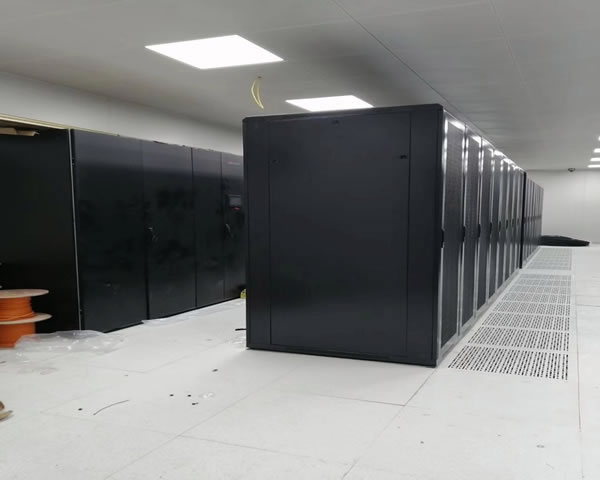
Analysis Of The Key Location Factors Affecting Operational Security Where The German Railways Signal Equipment Room Is Located
analyze the key location factors on operation assurance where the german railway signal room is located, including the impact and suggestions of geography, environment, communication and power access, safety and redundancy layout. -

Background And Impact Of The US Military Seizing Servers In Germany
This article explores the background of the US military seizing servers in Germany and its impact on international relations and cybersecurity.